Chapter 1: “Sam’s Mom Got Phished”
Sam Lisker: One of my parents clicked on a link that looked like it was from their investment company. The link didn’t work. She called the number that was on the screen. She then gave them some information about her account, and while she was in the account watching it, all of a sudden she was seeing all her stocks get traded.
Chapter 2: “Introduction”
Craig Schwartz: Hi, I’m Craig Schwartz, President of fTLD Registry Services. fTLD is the operator of the exclusive .Bank and .Insurance internet domain extensions. Welcome to the inaugural podcast of The Banker’s Domain, the show where we interview influential leaders in banking and cybersecurity, names you may not recognize at first, even though you’ve benefited from their leadership and vision. Since October is Cybersecurity Awareness Month, this is the perfect time to launch our new podcast.
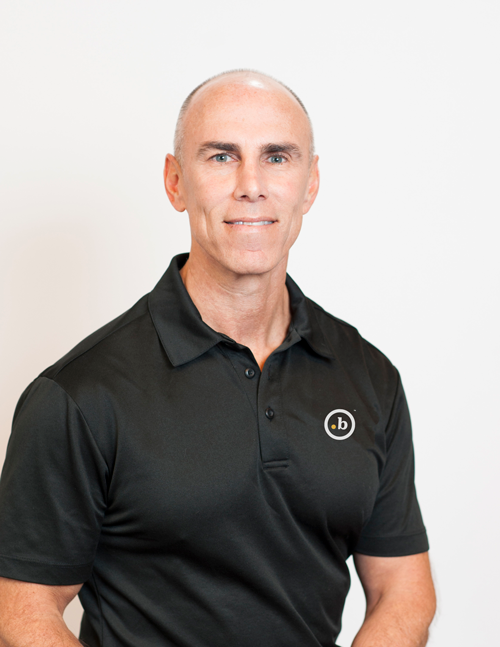
For this inaugural interview, I’m speaking with Sam Lisker, EVP of Business Intelligence, Innovation and Finance in the Office of Member Engagement at the American Bankers Association. Sam has served on fTLD’s operating management team and its board of directors since the company was established in 2011, and over the last 15 years has become a good friend.
Since this is our first podcast, it’ll flow a little differently from what’s planned for the series, because we believe it’s important to start with the origins of fTLD and .Bank, and particularly when and why the financial sector got involved in operating real estate on the internet. The Banker’s Domain is brought to you by .Bank, the secure domain for banks. You can learn more at our website, www.register.bank, or by clicking the link in the description.
Craig Schwartz: Welcome, Sam, and thanks for being the first guest on The Banker’s Domain.
Sam Lisker: Thanks, Craig. It’s an honor to be your inaugural guest. I appreciate it.
Chapter 3: “Welcome, and Why the Origins Matter”
Craig Schwartz: So Sam, when and for what reasons did the ABA and others in the financial sector first become engaged with ICANN?
Sam Lisker: When ABA first became aware that ICANN was approving the new gTLD program, we became concerned about the security related to the creation of financial services domains, .Bank and .Insurance to be specific. From that perspective, our initial outreach was to ICANN, to see if they had a plan to implement any of that heightened security around the creation of these domains. When we learned that they didn’t, our original move was to try to squelch, or shut down, .Bank and the ability to create .Bank and .Insurance. We appealed to the Department of Commerce, who worked closely with ICANN, and when they responded, they told us there was no plan to not allow the .Bank domain or the .Insurance domain. So we had to pivot and take a different approach.
Craig Schwartz: Thanks, Sam. How did fTLD itself, the entity, get established, and what is ABA’s role in it today?
Chapter 4: “From Concern to Partnership”
Sam Lisker: Well, as we decided to move forward, we realized there’s strength in numbers. We do a lot of really great things for the financial services industry, specifically the banks, as do some of our other industry partners, like BPI. We sought a partnership. We sought collaboration in the industry to make application for .Bank and .Insurance. By doing that, we needed structure, and so that structure came in the form of fTLD Registry Services. One of the things we did was reach out and do some research, and we found a really great leader in you. It’s been wonderful to be a partner with you for so long, on this journey. I think as a team, as a board, as an operating manager group, we’ve really accomplished a lot together. I think the numbers speak to that.
Craig Schwartz: Thank you, Sam, and I appreciate the compliment, and I will definitely take it. While I could certainly speak to some of the early challenges of starting the company and securing .Bank, it’d be interesting to hear it from your perspective, as one of the investing organizations and one of its leaders.
Sam Lisker: Sure. I think one of the early challenges came in the form of competition from other companies that were interested in applying for .Bank and .Insurance. From our perspective at the time, it appeared their motivation was to monetize the domains, and they had no regard for security in setting these things up. They were viewed as open domains, and anybody was going to be able to apply for them, which would essentially create additional risk for the banking industry and the insurance industry. So I think one of the things we did was by partnering across the industry and putting our concern for risk and security first we led with that. I really think that got ICANN’s attention during our application process, with your leadership and also with the vast network of experts you brought to this process. You know a lot of people from your history with ICANN, a lot of people we had no connection to. Those folks were instrumental in reviewing our application and making sure that it spoke to the true mission of fTLD, and to protecting .Bank and .Insurance on behalf of the industry.
Craig Schwartz: And I like the comment you made about the connections. That network helped us be successful right from the start, and it certainly helped us continue to be successful. For all the bankers out there listening to the podcast, we’re here to help. We’re here to be a partner as you think about undertaking this journey for your bank, and to lean on us. There’s no reason that you need to do this on your own.
Sam Lisker: And credit to you and your team. You’ve got a great team, and you’ve all put so much effort and energy in. A lot of what the banks that use these domains don’t realize is how much effort has gone into the behind-the-scenes work to build those systems, to ensure risk is managed, and to ensure compliance is actively managed. Not anybody can just apply for one of these domains, and that’s what makes these special. It really does change the whole dynamic. I think if we’d had a crystal ball back when we applied for this, and could have looked ahead to see how the risk to cybersecurity would become what it is in recent years, I don’t think anybody anticipated how bad it was going to be. The fact that we started this so early, and got ahead of it for so many banks and insurance companies, really speaks volumes to how we position this for success, and for their success, because it’s really gone very well.
Chapter 5: “Exclusivity as the Real Value”
Craig Schwartz: One of the things I talk about when I speak with bankers on the phone, or with insurance companies, is when they ask what the real value of these domains is. Why should we consider it? Something I always point to is that public domains such as .com and .net are readily available, they’re very inexpensive, and they’re easy to get. Anyone can buy a domain, set up a spoofed website, and create a phishing email campaign very quickly, and they’re off to the races doing bad things in moments. And artificial intelligence, which we’re going to talk more about on today’s podcast, is only accelerating the ability for the bad guys to do things quicker and more harmfully. So one of the real benefits of our domain, and what makes it special, is that exclusivity factor. Gating who gets in, and permitting how domain names may be used. We’re proud to say that in our 11+ years of history, we’ve never had a confirmed case of phishing, a spoofed website, or malware distribution from anyone using a .Bank or .Insurance domain name. I don’t think there’s another domain extension on the internet that can touch that success metric.
Sam Lisker: Yep, I agree. Those are all very good points, and it’s proven itself out. One of the things I used to say in the beginning, when ICANN first made this announcement, was that these domains, and other domains, were solutions in search of a problem. Well, the problem has basically come to manifest itself from a security posture.
Craig Schwartz: We’re eleven years into this. What’s adoption looking like for the .Bank domain?
Sam Lisker: Adoption is fairly strong, I would say. We have, I think, to date, nine hundred and thirty nine .Bank domains active and operational. An important thing to note: when we made application for this, we had choices. We could have done this domestically, or we could have done it globally. We decided it was so important for the industry that we went the global route. The number of banks participating around the world is nine hundred and thirty nine, is really good, especially in an industry that’s seeing consolidation. One of the things I always note is that every year this number continues to climb. As the number of banks decreases, the number of banks turning on their .Bank domain is increasing, and I think that’s really important.
The core processors, at the beginning, didn’t really know what to do. They didn’t know how to handle it when we, or the banks, came at them. It created an obstacle, which was understandable, but we worked hard to overcome it. Today, most of the core providers, especially the big ones, have a different comfort level with getting a bank onto the .Bank platform, and they’ve become really good trusted partners. A lot of kudos to them for working with us, and a lot of kudos to you and your team for putting these resources out on fTLD.com’s website, to make them available as people consider making the move. I think that collaboration has gone a long way to shorten the time it takes a bank to register its domain and operationalize it.
Chapter 6: “Security Has Layers, Like an Onion”
Craig Schwartz: Thanks, Sam, for the plug for fTLD.com. For our listeners, we also have register.bank, which is a bank-specific website. It has information about our policies, procedures, security, success stories, and videos, things that are really helpful in a bank’s planning for how to roll this out for their bank. On the insurance side, we also have register.insurance and similar information. So, Sam, as we wrap up this first portion of our podcast: you’re a leader at the ABA who speaks with bankers all the time, and I see you at the conferences, I see you in the corner, talking to folks. What’s your message to them about the .Bank domain?
Sam Lisker: My message starts at a higher level. Security has layers. With the rapid increase in cyber fraud and phishing, I call it like an onion. These onion-like security layers, like .Bank, have never been more important. Banks have physical security at their locations. They have secure front doors with alarms and safe combinations, and all sorts of different security to get in. And .Bank is your online vault door. It really functions that way. It doesn’t do it alone. It works with the other security processors, processes, and procedures that banks use, but it is a really important layer. Banks need to do everything they can to lock down their websites, their emails, and their online payment systems, and .Bank is a solution that helps banks do that.
The other opportunity I think a lot of banks don’t think about is this: if they weren’t able to get a really great domain, or they’ve never been happy with it since .com first existed. A commonality among banks is that a lot of banks have a lot of common names in their brands. To be able to leverage a new secure top-level domain in addition to the .com, the .biz, the .net, the .org, or whatever they’ve picked, gives them options. If they’re facing rebranding, this is a great opportunity to move to .Bank with that rebranding. It goes hand in glove. Your marketing teams, your IT group, your legal group, and your executive leadership are typically the four legs of the stool that work together to make this happen. Rebranding is a really important time to consider a move to .Bank.
Craig Schwartz: The other thing we’re seeing quite a bit now is brick-and-mortar banks establishing a digital-only presence. They’re trying to come up with cool and unique names for those digital banks. Since .Bank is still pretty uncharted real estate still after more than a decade, those great names are available, whether it’s a two-letter name, a three-letter name, or something more. The opportunities are endless, and when you add the additional security benefits on top of a domain name that’s more closely aligned with your brand, your products, your services, it’s a win-win from every perspective.
Sam Lisker: Right, completely.
Chapter 7: “A Career Built on Security”
Craig Schwartz: So, Sam, we’ve covered some fTLD and .Bank history, and you actually got real-world security experience. You were a CIO and CISO at America’s Community Bankers before ACB became part of the ABA in 2007. Let’s dive a little into that real-world experience. What first got you interested in banking, and how did you get into the security aspect of it?
Sam Lisker: I got interested in banking when I took the CIO role with America’s Community Bankers, back in 1996. ACB originally started out as a thrift and S&L trade association, and as we evolved, there was an opportunity to merge with the American Bankers Association in two thousand and seven, and that’s how I continued down that road. I’ve been in this business for just over thirty years. I’ve always enjoyed working with bankers and demonstrating value on a daily basis. Our teams provide a lot of support for the banking industry, and bankers are always so grateful and engaged with us. That’s kind of how I got involved. Before that, when I went out of college, I worked at the Department of Justice. I had a pretty cool job as a young person: I worked in the Federal Witness Protection and Wiretap areas, back in the days of prosecuting Manuel Noriega in the nineties. So I got to see a lot at a very young age, and I understood the importance of security. My father is a retired FBI agent, and security has been ingrained in us at a very young age. So it was a natural fit to start this role.
Craig Schwartz: That’s awesome. We hear every day, whether it’s on a podcast, on the news, or on the radio, about breaches and ransomware attacks and bad stuff happening online to financial services companies. What’s the first financial crime you remember hearing about, and did you actually believe it?
Sam Lisker: Yes, I believed it, because it happened to me. I did a refi on a mortgage loan and became a victim of identity theft. I know where it happened, because I didn’t share my information anywhere other than on this refi, with a mortgage broker. Then I received a notification from a bank I didn’t have a relationship with, letting me know I had a security problem. I doubted it was even real. I called them, just by chance, and they wanted me to give them my Social Security number. I said absolutely not, and they said, “Well, if you give me the first part, I’ll give you the last.” I did it, and then it all fell together. That bank doesn’t exist anymore, but the person I spoke to was extremely helpful, put me in touch with all the credit bureaus, and then it was a four-month journey to get that resolved. So I do remember it very well. It was awful, and if anybody else has been through it, they know what pain it is.
Chapter 8: “AI, and Feeling Like a Beginner”
Craig Schwartz: Let’s hope it never happens again. You’ve talked about your long tenure in banking, 30+ years, and your interest in history and technology, with the rapid pace of change in the world these days. What’s the last thing you learned that made you feel like a beginner again?
Sam Lisker: I think AI is the answer most people will give to that, and it certainly is for me. It’s truly transformative technology. Depending on who you listen to, if you listen to the investment channels, they talk about how it’s a bubble, and I’m sure there are certain things in AI that will be bubble-like. But for those who think this is just a fad that will come and go and be ignored, I would venture to guess they’re all sorely mistaken. It’s transformative technology. It improves efficiency tremendously, but it has to be used correctly. Like anything, a lot of people right now are trying to figure out how to leverage it to make their jobs and their lives better.
Craig Schwartz: Sam, thanks for sharing the piece you did a moment ago about being a victim of identity theft. It sounds like it was an awful experience. I’m wondering, what’s the hardest conversation you’ve had with someone about money they lost or almost lost? Not you, but somebody else.
Sam Lisker: Recently, people of our age, Craig, have elderly parents, and a lot of us are dealing with everything that comes with that right now. One of the things that happened in my family was that one of my parents clicked on a link that looked like it was from their investment company. The link didn’t work. She called the number that was on the screen and gave them some information about her account. While she was in the account, watching it, all of a sudden she was seeing all her stocks get traded. She quickly put the phone down, picked up a different phone, and called her investment company. They were able to stop it. The good news is she suffered no loss. They got it quickly, and the money didn’t leave the account. But it was pretty startling for her. As much as I’ve tried to ingrain in my parents how careful they need to be about the texts and emails they receive, it can happen to just about anybody, and it happens very quickly. That was a tough conversation. Getting her to take ownership of it was difficult. She didn’t feel like she had done anything wrong. But one thing that came out of it, which I think was really good, is that she’s been educated and didn’t suffer a loss, and we put additional security in place to make sure that doesn’t happen again. You were incredibly helpful. I brought this to you because she saved a copy of the email. When I looked at it, I realized the email came from a legitimate bank’s email domain. It was a .com domain, a legacy .com domain that the bank continued to maintain, because they’ve been around so long that a lot of their legacy customers had that email address bookmarked and used it frequently. This bank had actually taken the step to receive a .Bank domain and turn it on, but this email didn’t come from the .Bank email address. It came from their legacy email address, which, with your help, demonstrated that the bank hadn’t put the appropriate security validation on that old domain. I reached out to the bank, given my position, and spoke to the people in charge. They’ve since made the change. They were mortified that this had happened. But the fraudsters had leveraged that. They discovered the domain was available, it could be exploited, and they used it to exploit my parent.
Chapter 9: “Email Authentication and Legacy Domains”
Craig Schwartz: One of the things I always say to bankers on a call, whether they’re committed to switching to .Bank or not, is that there’s certain domain security they must absolutely implement on any domain they have. Whether it’s a .com or a .net, and certainly within .Bank, because it’s required, you must fully authenticate your email, full stop. You can read online all the time that the number one way to avoid or prevent phishing is proper email authentication. It’s pretty technical, and we’re not going to get into that on today’s podcast, but there are lots of resources on our website that talk about how to do this. I would say domain security is critically important, and adding that layer of .Bank on top of it gives banks an extra level of protection that they will simply never have in a public domain.
Sam Lisker: Yeah, I couldn’t agree more.
Craig Schwartz: Let’s look at the future landscape: where you’ve been, where we are today, and what the future looks like. The conversation so far has been super interesting. I’m actually learning things I didn’t know before, and that’s pretty cool. So Sam, what’s something you believed early in your career that doesn’t hold true for you now?
Sam Lisker: I started with computers and technology a long time ago, and in the beginning, none of these cyber risks existed. I remember when McAfee was formed, or when Peter Norton came out with Norton Utilities, and all the early-stage antivirus companies that were established. I never could have imagined how pervasive it would become. All of those systems were independent. They weren’t connected. Your fear was downloading a program that would release some kind of virus that wiped out your system. So I think that’s really evolved. I never imagined the risks and concerns would be to the extent they are today, from an AI perspective. I never could have predicted this. I don’t think very many people, maybe futurists, could have predicted what role AI is playing in today’s technology. And the last thing I’d say, Craig, is that the shift in the value of human capital, which I think AI touches a lot, is something we all have to watch. The jury’s out on what exactly that will mean. What are your thoughts? What do you believe early on in your career that doesn’t hold true now?
Chapter 10: “Third-Party Risk Runs Deep”
Craig Schwartz: Well, that’s a great question. I don’t think early on I was particularly computer savvy. I didn’t think it was necessary, and I didn’t get into the internet fad super quickly. But fast-forward a few decades, and it is the center of most people’s universe. It’s how we find information and how we communicate with friends and family, around the corner and around the world, and it’s really changed the way we all live. Think about six years ago, when we were all going through the COVID pandemic. People weren’t leaving their houses, but they still needed to order food, and they still needed to see their doctors. Telehealth has really exploded, I think as an outcome of COVID. Some might speak favorably about it, some might have a different view, but readily available access to information, professionals, and resources has accelerated with what the internet did. And now if you mention AI, it’s a total game changer. It’s shaping the way we do our business now. You talked about the toll on human capital, and I’m kind of glad I’m not a graduating college person today, having to deal with the hard choices they make. They’ve gone to college, they’ve probably taken out lots of loans, they’ve got debt, and they thought they were going to become marketing gurus, and lo and behold, AI can do a lot of that stuff pretty quickly and pretty inexpensively. So people are having to make hard decisions about their future now, and it’s because of technology.
Sam Lisker: The other thing we’re seeing a lot of is third-party risk. We’re inundated with banks that are concerned about the relationships they have with their technology partners, because it’s not just third-party risk. You get into fourth, fifth, and sixth party risk. There’s downstream risk, because so many of the systems these banks use are all online. They’re all SaaS models. The questions are: where is your data being housed? Is it in the United States? Is it outside the United States? Reviewing the SOC reports, reviewing the ISO reports, doing the pen tests. There’s just so much to it, and it’s very time-consuming, but you can’t skip these steps. They all comprise the layers that are so critical to security.
Craig Schwartz: That response is actually a really good segue into a question about cyber insurance. Is cyber insurance making banks safer, or do you think it’s just making the losses survivable?
Sam Lisker: I don’t know if I’d characterize it as making banks safer. Only banks can make banks safer. But what some insurance companies do, and I can speak about what ABA Insurance Services does, since they’re one of ABA’s endorsed partners and a valued partner for a lot of years, is help banks by evaluating their security posture. They perform scans to identify risks, and they communicate those risks back to the bank in order to make sure that the bank can see everything that’s creating risk for it. It helps make banks more resilient when these types of crimes present themselves. Again, you’ve got to go back to the human being. If an email comes through, and a teller or anybody else in the bank clicks on the link, it could potentially cause a problem for the bank, depending on its security procedures. But where insurance companies help them evaluate what the security posture looks like from the outside coming in. There have been examples of that which have been very helpful to banks.
Craig Schwartz: Thank you, Sam. So far it’s been a great conversation: intriguing, enlightening. Let’s move on to what we call reflection, wisdom, and action. Let’s start with: which information sources do you follow to stay informed about your industry?
Sam Lisker: I read ABA NewsBytes Daily. If you’re a member of the ABA, all of your employees are eligible to receive NewsBytes. If you’re not getting it, you should get it. It’s very topical. The ABA Banking Journal is another publication I read religiously. The American Banker newspaper is one as well. And the main newspapers: the Wall Street Journal, the Washington Post, and sometimes I’ll look at the New York Times, depending on whether it’s a technology-related story. I look at LinkedIn quite a bit. There are people I follow on LinkedIn, and I’m always interested to see what they say. There’s a lot of noise on LinkedIn as well, so getting through that can be a little arduous. There’s a newsletter called PYMNTS, if you’re not looking at that. It’s a good one. And there are what I call dives: CIO Dive, CFO Dive, and Banking Dive. I look at those as well, and there are always some good pieces of information in those emails.
Craig Schwartz: Those all pretty much focus on the financial side of the industry. I’m thinking of the domain namespace, which is where we operate, some things I regularly depend on are a publication called CircleID, Domain Name Wire, and DomainIncite. Many of our partners, people we do business with or service providers, also publish white papers. You mentioned LinkedIn, that’s obviously a great source of information for staying abreast of the latest news, whether it’s financial services, cybersecurity, or the marketing aspects of the business we’re in.
Let’s look at wisdom for a second. What’s one of the hardest decisions you’ve made that you never look back on, with no second guesses or regrets?
Sam Lisker: Personally, coming from a family of doctors and lawyers, that was the route I was encouraged to go, and I didn’t do either of those. I like technology, I like computers, I like using technology to solve problems, and I’ve never looked back. I’m always really pleased with the choice I’ve made in the business and technology space. It’s just a lot of fun.
Chapter 11: “Fear, Not Technology, Slows Banks”
Craig Schwartz: Thinking back on a lot of these conversations I’ve had with bankers, pre-switch and post-switch, I’ve seen banks do this process within a couple of days, simply because they were motivated, there was a sense of urgency, and they were well resourced. Other banks take a more conservative approach, and it takes a little bit longer. But the one consistent piece of feedback I hear from everyone is: “Wow, it wasn’t as hard as we thought it was going to be.” We thought there might be customer confusion, and we might have gotten one or two phone calls from customers saying, “Hey, is this .Bank thing real?” But the overriding issue at the onset is fear. Banks have only ever known public domains like .com, and the notion of change can feel scary. There’s a lot of resistance to it. But when you think about the benefits, when you think about the very nominal cost investment (I usually tell bankers around twenty-five hundred dollars a year), they can implement .Bank. You don’t get much more bang for the buck than this layer of protection for the bank.
So as we get into the home stretch of this inaugural podcast, for our listeners who want to know more about you and the work you’re doing, how should they connect with you?
Sam Lisker: People can look me up on LinkedIn. Just look up Sam Lisker, you’ll find me there, send me an invite, and I’m glad to connect with folks and answer any questions about .Bank. I’ll probably refer them to you, Craig, since you and your capable team will be much more efficient at answering those questions than I can. But I can speak to the value, and why the ABA is behind this, and how important it is to the industry.
Chapter 12: “Why Craig Joined fTLD”
Craig Schwartz: Thanks, Sam. I’ve spent pretty much the entire episode asking you questions, so it seems only fair that I give you an opportunity to ask me a question or two. Let’s turn this around and let you lead for the moment.
Sam Lisker: All right, that sounds good. As I mentioned earlier, you’ve been a leader in this space for a lot of years, when you were with ICANN. You had a pretty secure job with ICANN, and we came to you with this idea back in 2011, when we were getting ready to make application for .Bank and .Insurance. So I’m curious. What did you see as the opportunity? What made you take the leap and join fTLD?
Craig Schwartz: Great question, and one I’ve thought about a lot, particularly as I think about retirement in the next year or so. In 2011, I’d been at ICANN for five years, and I was starting to think about a change anyway. A gentleman by the name of Greg Rattray, who I had worked with at ICANN, had moved on to work with the Financial Services Roundtable, now the Bank Policy Institute. He called me one day and asked whether I was open to talking about making a possible change. It was kind of fortuitous that I was thinking about it. Greg knocked on my door, and I think what really sold me was that it just seemed like a no-brainer. When you think about all the bad stuff that happens online, because, as I said earlier, I can go to a registrar like GoDaddy and get a .com domain for nine bucks and make it look like a real bank’s name. With the help of AI and other tools, I can have a spoofed website set up in probably minutes, and do the same on the phishing side. So for me it was: this is a no-brainer. With the ABA and BPI behind this, having industry support, I thought, this is going to be easy. It has not been easy, but it’s the right thing for the sector. I love it as much now as I did in 2011, and I believe in it. That’s why doing these banker calls almost every day is the best part of my job: educating people about why they need to prioritize domain security, and how straightforward it can be when you plan for it and resource it properly. .Bank is a security story you can talk to your customers and they understand it. Don’t talk to them about routers and switches and firewalls and third-party vendors. They won’t understand any of that, and they’re not going to care about it. But if you give them something to visually look for, your .Bank at the end of a URL or .Bank at the end of an email, you take 95% of the guesswork out of someone clicking on a bad domain. So I reiterate the fact that I think this is an absolute must, and I’m going to keep pushing that message and advocating for it until I wind down here at fTLD.
Chapter 13: “Domain Sprawl and Whack-a-Mole”
Sam Lisker: Right. Well, I appreciate all you’ve done in order to make that so successful. I do have another question for you. In the domain space, we’re seeing it now, it’s become the Wild West. We went through a couple of iterations of the new gTLDs, generic top-level domains, and that’s where .Bank and .Insurance came from. But with all the new rounds, plus the most recent round of applications, do you feel that domain security is being hurt by the prevalence of so many domain extensions? Is it creating confusion in the market? You talked about the importance of customers looking for a .Bank domain, and now you’ve got so many people out there trying to come up with the new, catchy extension after the dot, to the right of the dot. How do you deal with security with these domains?
Craig Schwartz: So, I’m not sure domain security is being hurt. However, the prevalence of online fraud and abuse is skyrocketing. When it was happening mostly in a few public domains. Now you’ve got more than a thousand. I think I mentioned twelve hundred before. Names are cheap, they’re readily available, and so cyber criminals have this vast landscape of domains they can pick from, to appeal to consumers and to do bad things. The things we talk about all the time: spam, phishing, malware. For law enforcement and the like, if you’re familiar with the game whack-a-mole, it’s been this accelerated game of whack-a-mole. You tamp down a bad guy in one domain extension, and it pops up in another domain extension. Unfortunately, the vast majority of these new domains don’t have any guardrails, they don’t have any security. I don’t even know if .beer is real, or .pizza is real, but there are a lot of domains like that out there now, purely generic names. They’re kind of cool, and it can be kind of fun. But there are also a lot of domains that are linked to financial services: .loan, .money, .capital, .credit. For the unknowing consumer, when they see those, I think there’s an inherent belief that they should be trusted and they’re safe. The reality is that they’re not. They are effectively .com lookalikes. That’s why we have spent the last, what is it now, fifteen years building something that’s different: having an offering that makes a meaningful change for banks and their customers when it comes to online security. We’re going to continue that fight, and I look forward to continuing to work with you, Sam, the ABA, and others in the sector on advancing this.
Sam Lisker: Okay. Sounds good.
Chapter 14: “Outro”
Craig Schwartz: Sam, thank you for joining us on The Banker’s Domain. You are a force for good in a world increasingly threatened by cybercrime and fraud, and thank you to our listeners. If you’d like to support our show, like, comment, and subscribe wherever you get your podcasts, whether it’s YouTube, Spotify, or Apple. You can learn more about the American Bankers Association at ABA.com, and you’ll find the relevant links in the episode description. Please visit www.register.bank to learn more about .Bank and the work we’re doing. With that, I’m Craig Schwartz. See you next time on The Banker’s Domain.